
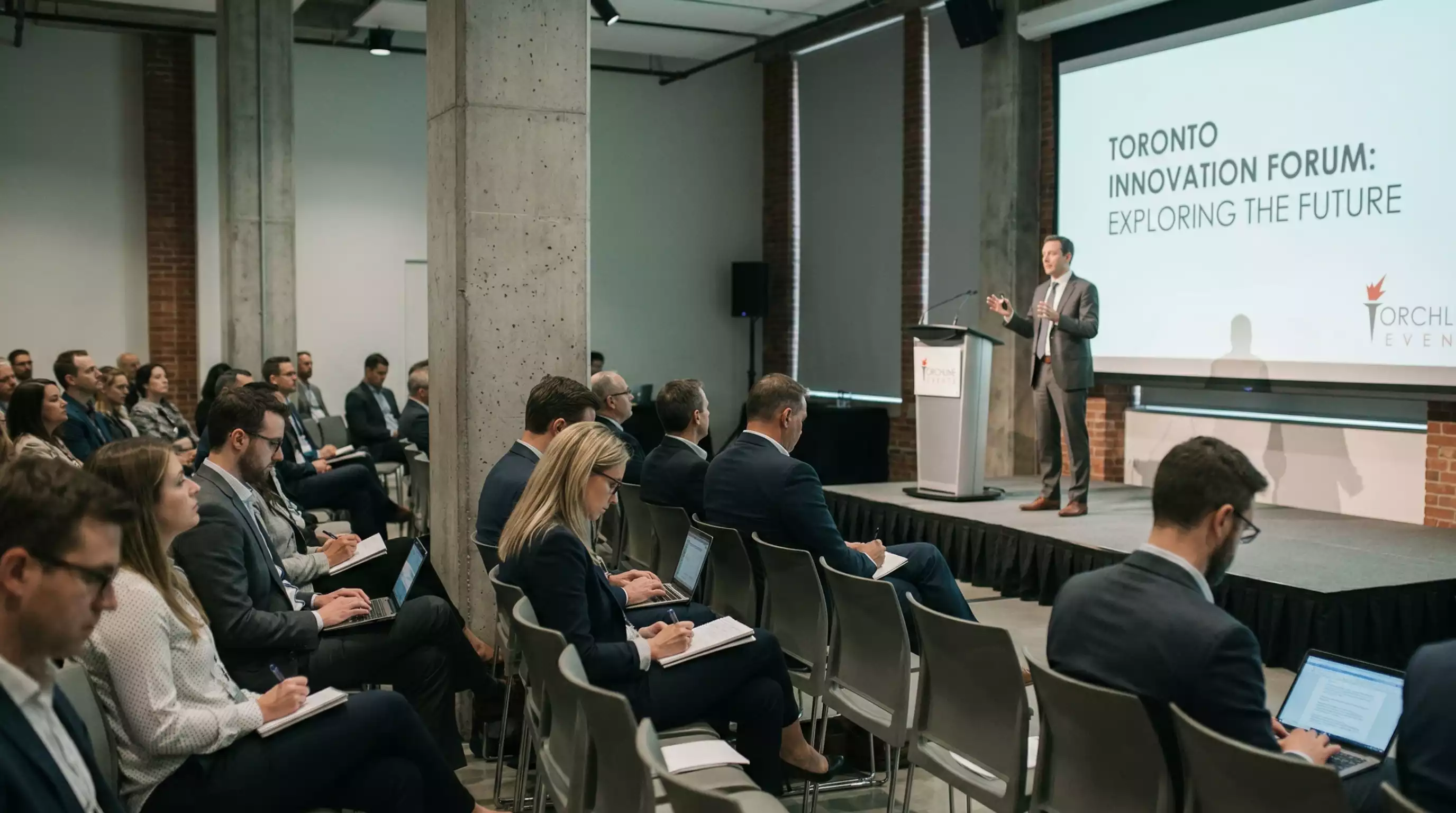
A well-run corporate conference can change how an organization thinks, how a team connects, and how a brand is perceived in its industry. A poorly run one does the opposite - and people remember it for the wrong reasons.
Planning a conference is one of the most logistically complex events you can produce. This guide covers every major phase of the process - so you know exactly what's involved, what to prioritize, and how to ensure your event runs without a single visible hiccup.
Phase 1 - Define Your Conference Blueprint (12+ Weeks Out)
Set your objectives - Every planning decision flows from your objectives. Are you building thought leadership? Driving team alignment? Recognizing achievement? Write your objectives down in one clear paragraph before you start.
Define your audience and headcount - Estimated attendance drives almost everything: venue size, catering volume, AV scale, staffing needs, and budget. Work with a conservative number and build in 10 to 15% flex capacity.
Establish your budget framework - Break your total budget into key categories: venue (typically 25 to 35%), catering (20 to 30%), AV and production (15 to 20%), speakers and entertainment (5 to 15%), staffing and logistics (10 to 15%), and marketing and materials (5 to 10%).
Build your core team - Clearly assign ownership across: programme and content, logistics and operations, communications and marketing, speaker management, and day-of coordination.
Phase 2 - Venue Selection (10-12 Weeks Out)
The venue is the single most impactful early decision you'll make. Conference venue essentials checklist:
- Sufficient capacity for your peak headcount
- Built-in or compatible AV infrastructure
- Reliable, high-bandwidth Wi-Fi
- Natural light and ventilation in session rooms
- Catering kitchen and service capacity
- Loading access for production equipment
- Proximity to public transit and parking
- Accommodation options nearby or on-site
In Toronto: Our top conference venue recommendations for 2026 include the Globe and Mail Centre, Metro Toronto Convention Centre, Hotel X Toronto, Bram & Bluma Appel Salon, and Evergreen Brick Works.
Phase 3 - Programme Design (8-10 Weeks Out)
Build the agenda with energy management in mind. The biggest mistake in conference programming is treating the agenda like a calendar to fill rather than a pace to manage.
A proven daily structure:
- 8:30 to 9:00: Registration and arrivals
- 9:00 to 9:30: Opening keynote (energizing, visionary)
- 9:30 to 11:00: Main content block 1
- 11:00 to 11:30: Networking break
- 11:30 to 12:30: Main content block 2 or breakouts
- 12:30 to 13:30: Lunch
- 13:30 to 14:30: Panel discussion or interactive session
- 14:30 to 14:45: Break
- 14:45 to 15:45: Breakout sessions
- 15:45 to 16:30: Plenary close, Q&A
- 16:30+: Networking reception
Phase 4 - Speaker and Content Management (6-8 Weeks Out)
Speaker coordination protocol:
- Send invitations with full brief: topic, time slot, duration, format
- Confirm travel, accommodation, and AV requirements
- Set a clear presentation submission deadline (minimum 5 business days before)
- Schedule a technical rehearsal for each speaker
- Prepare a green room and dedicated speaker host
Content consistency: For conferences with multiple speakers, establish a branded slide template and enforce it.
Phase 5 - AV and Technical Production (6-8 Weeks Out)
AV is where conference production either elevates or undermines everything else.
AV specification essentials:
- Main stage: Large-format LED or projection, broadcast-quality sound, confidence monitor, wireless microphones, stage lighting
- Breakout rooms: Smaller screens, clear audio, reliable wireless microphones
- Live streaming: Dedicated setup with camera operator, encoder, and tested broadcast link
- Recording: Full session recording for post-event distribution
- Technical director: A single technical director who owns all AV across the venue
Phase 6 - Attendee Registration and Management (4-6 Weeks Out)
Registration system requirements:
- Custom registration portal with event branding
- Automated confirmation and reminder emails
- Dietary requirement and accessibility need collection
- Session selection for multi-track conferences
- On-site check-in system
- Branded name badges
Phase 7 - Day-of Execution
Setup day: Full venue setup, complete AV technical rehearsal, speaker run-throughs, catering service rehearsal, staff briefing.
Day of priorities: arrivals management, run-of-show adherence, speaker management, technical monitoring, and catering coordination.
The One Thing Most Conference Planners Miss
The transition moments. What happens between sessions? When a speaker finishes and the next one isn't ready, who's managing the room? These micro-moments collectively define whether a conference feels professionally produced or loosely organized. Plan every single one.